
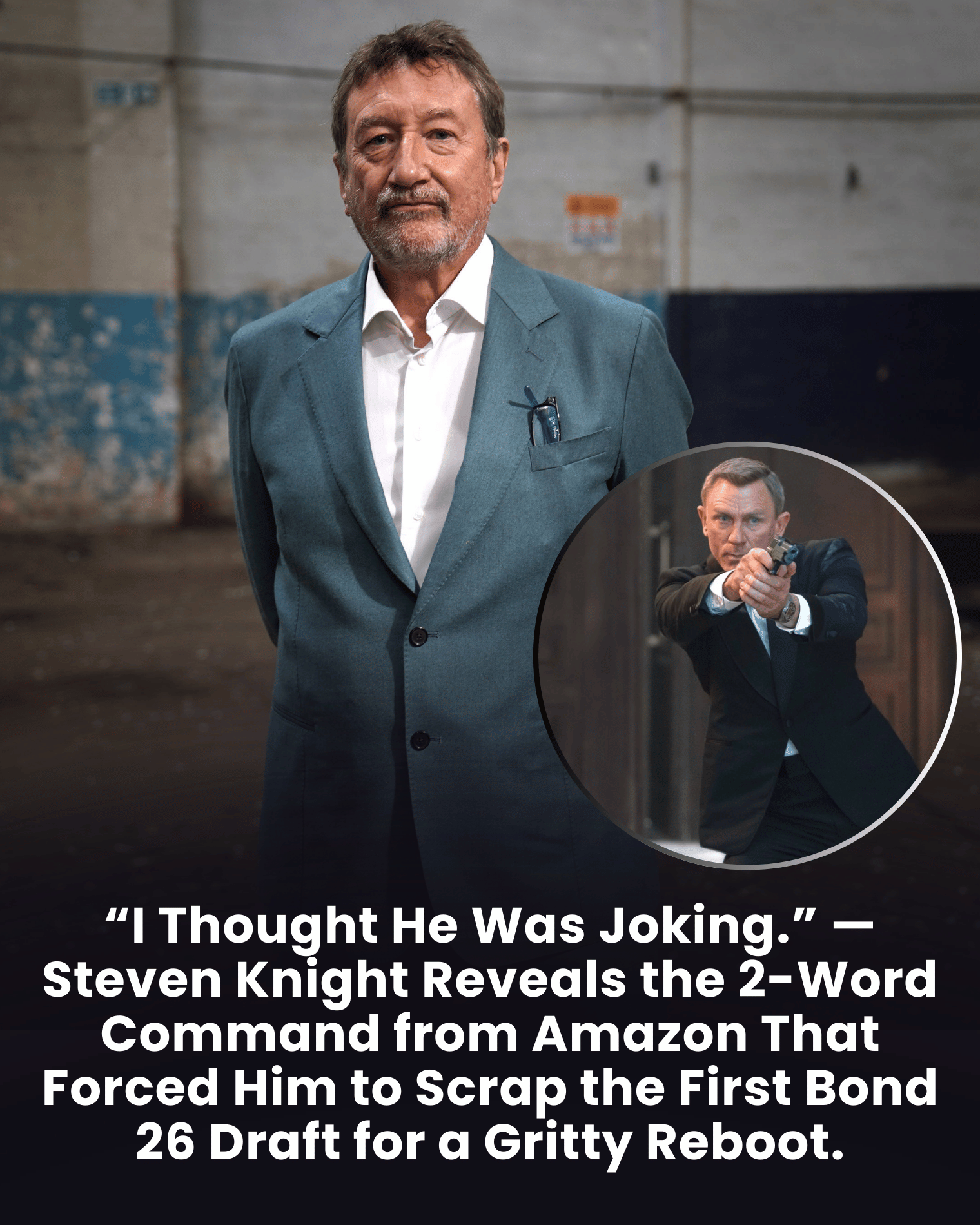
Steven Knight has made it clear that writing the next James Bond film is not something he views as ordinary franchise work. In recent comments tied to an appearance on BBC Radio 4's Today, the Peaky Blinders creator said he is "enjoying every single second" of shaping the new 007 screenplay, while also signaling that his approach is being driven less by nostalgia for past movies and more by reverence for Ian Fleming's original novels. Radio Times reported that Knight specifically praised Fleming's books as "so underrated as literature," and said the world the author created feels both "tangibly real" and "almost dreamlike."
That distinction matters, because Bond is clearly entering a new phase. Amazon MGM Studios officially announced in July 2025 that Knight would write the next James Bond movie, with Denis Villeneuve directing and Amy Pascal and David Heyman producing. Amazon also confirmed that, after its March 2025 deal with Barbara Broccoli and Michael G. Wilson, the studio now holds creative control of the Bond intellectual property. That corporate shift has fueled intense speculation about what kind of 007 film will emerge first from this new era.
Knight's latest remarks suggest the answer may be a more psychological and literary Bond than fans have seen in years. Rather than simply reproducing the polished formula audiences associate with the Daniel Craig or even Pierce Brosnan years, he appears to be looking backward to move forward. He has emphasized Fleming's style, dialogue, and atmosphere as key reference points, hinting at a version of Bond that is moodier, stranger, and more interior. That lines up with the broader idea that the next installment could abandon familiar modern comforts and rebuild the character from the inside out.
What makes this especially intriguing is the tension between tradition and reinvention. Bond has always been a franchise built on repetition with variation: same icon, different decade. But Knight seems aware that merely delivering a "classic" Bond adventure may no longer be enough. In earlier comments after taking the job, he described the challenge as making Bond "the same but different," a telling phrase for a writer now tasked with relaunching one of Britain's most mythic screen figures under new studio leadership.
His comments also reveal genuine awe about the responsibility. Radio Times quoted Knight saying Bond is now a figure of "folklore," comparable to Robin Hood or King Arthur, and therefore must be treated "with respect." That perspective may explain why his current direction sounds less like a loud reinvention and more like a restoration project—one aimed at recovering Bond's darker edges, his literary mystique, and the uneasy glamour that defined Fleming's pages before the films gradually turned him into a more straightforward blockbuster machine.
So while many details about Bond 26 remain secret, one thing is becoming clearer: Steven Knight does not seem interested in giving audiences a safe rerun. He appears to be chasing something more haunted, more visceral, and more faithful to the character's roots. For a franchise searching for its next identity, that may be the boldest move possible.