
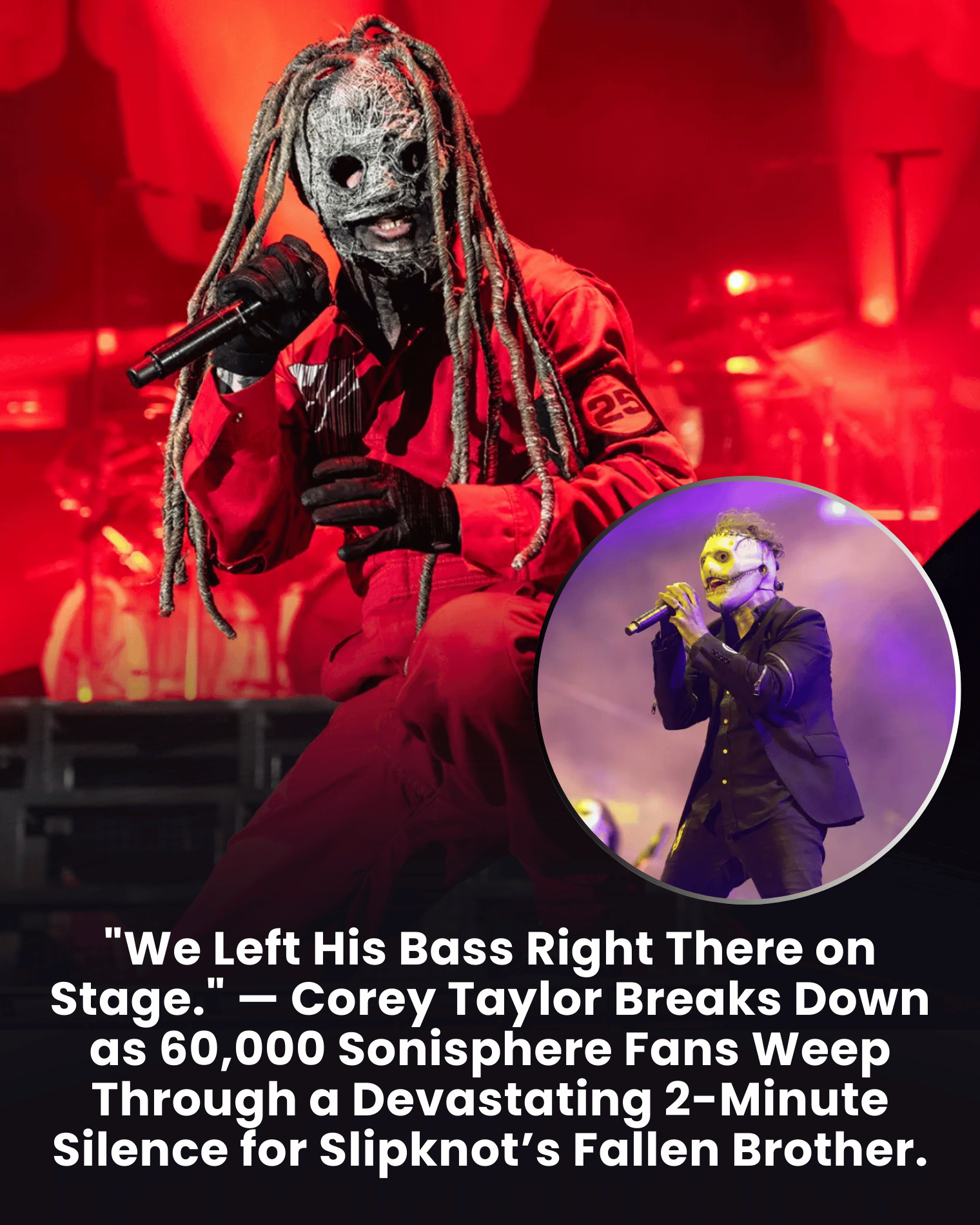
In the summer of 2011, a moment of profound grief and unity unfolded on one of heavy metal's biggest stages. At the Sonisphere Festival in the United Kingdom, members of Slipknot stood before tens of thousands of fans not just as performers, but as a family mourning one of their own. The band had returned to the stage for the first time since the devastating loss of their bassist, Paul Gray, whose death in 2010 had shaken the metal community worldwide.
For a band known for their intense stage presence, elaborate masks, and explosive performances, the atmosphere that night was very different. When frontman Corey Taylor walked onto the stage without his iconic mask, the gesture alone spoke volumes. It was an unusually vulnerable moment for an artist who typically performed behind the symbolic armor of Slipknot's theatrical identity.
At the center of the stage stood a haunting tribute. Paul Gray's bass guitar was placed upright beside his empty jumpsuit, a silent reminder of the band member whose presence had been foundational to Slipknot's sound and identity since their early days. For the band and their fans, Gray had been more than a musician—he had been the heartbeat of the group.
As Taylor approached the microphone, the massive crowd of approximately 60,000 fans could sense the emotional weight of the moment. The usual roar of anticipation that greets a Slipknot performance faded into a quiet tension. Taylor gripped the microphone stand tightly, visibly struggling to steady himself as he looked out across the sea of fans gathered in front of the stage.
When he began to speak, his voice trembled with emotion. He spoke about Gray not only as a bandmate but as a brother, someone who had helped build the band from its earliest days in Iowa into one of the most influential metal acts in the world. The words came slowly, each one carrying the raw pain of loss.
Then Taylor raised his fist into the air and asked the crowd for a moment of silence.
What followed was one of the most unforgettable scenes in the history of metal concerts. A festival crowd known for its chaotic energy and thunderous noise gradually fell into complete silence. Tens of thousands of fans held their hands high in the air, many forming the familiar "devil horns" salute associated with heavy metal culture.
For two full minutes, the entire field stood in quiet tribute.
Some fans closed their eyes. Others wiped away tears. The silence was heavy and deeply emotional, a powerful contrast to the explosive music that typically defined Slipknot's performances. On stage, the band members bowed their heads, allowing the moment to belong entirely to the memory of their fallen friend.
When the tribute ended, the crowd erupted—not with the usual frenzy, but with a wave of applause and cheers that felt more like a collective embrace. It was a reminder of the unique bond between Slipknot and their fans, a community built not only on music but on shared intensity, loyalty, and emotion.
That night at Sonisphere was more than a concert. It was a moment of mourning, remembrance, and unity that demonstrated how deeply Paul Gray's legacy resonated. For Corey Taylor and the rest of Slipknot, leaving the bass guitar standing alone on stage symbolized both the loss they carried and the enduring presence of the brother who helped shape their journey.