
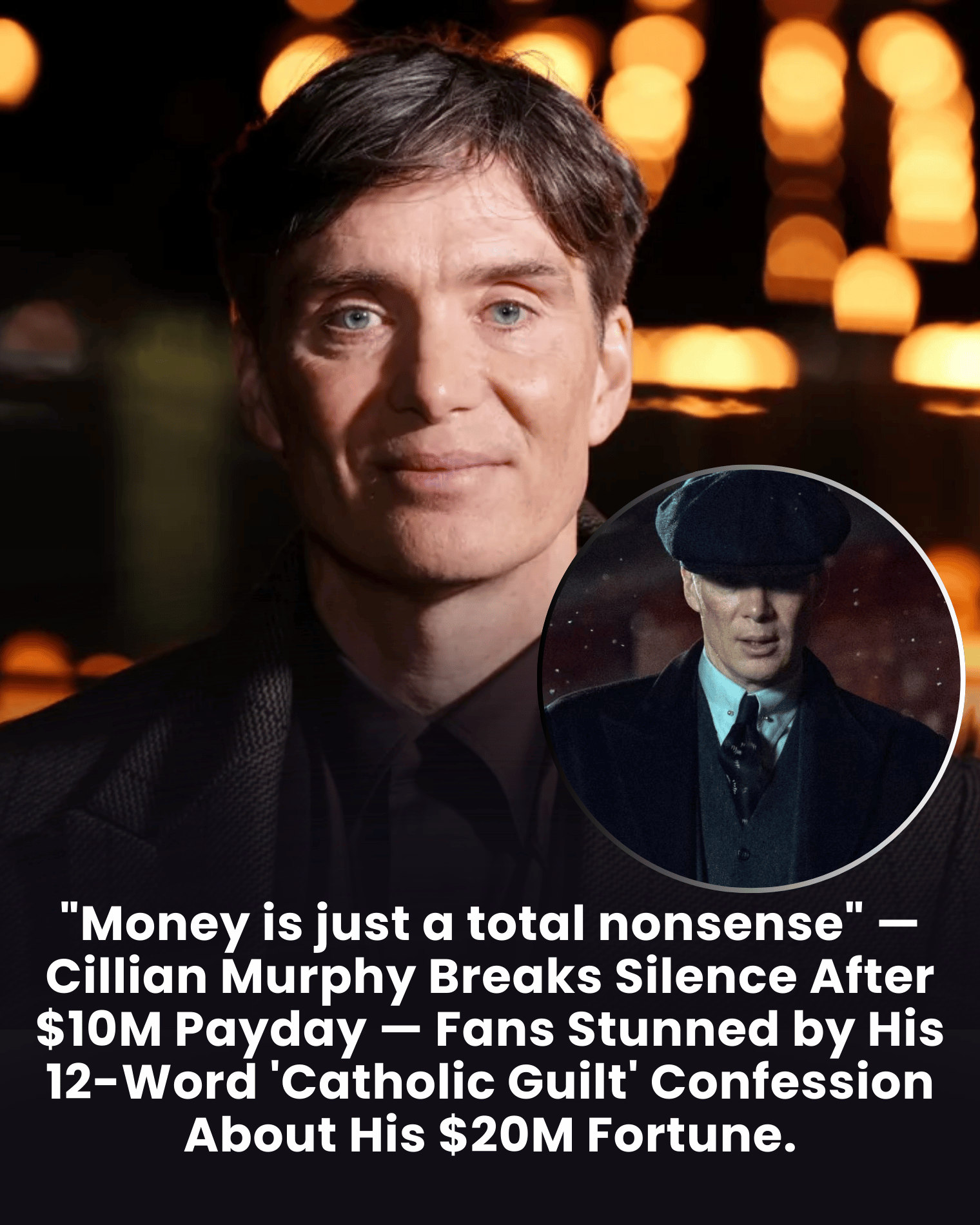
"Money is just a total nonsense." With that blunt remark, Irish actor Cillian Murphy once again reminded fans that his relationship with fame and fortune has always been complicated. Despite earning one of the largest paychecks of his career for Christopher Nolan's film Oppenheimer, the Oscar-winning actor has openly admitted that wealth brings him more discomfort than celebration.
Murphy, now 49, reportedly earned around $10 million for portraying physicist J. Robert Oppenheimer in the critically acclaimed film that dominated awards season and ultimately secured him the Academy Award for Best Actor. Yet instead of reveling in the success, Murphy responded with a surprisingly humble reflection that quickly circulated among fans. In an interview, he confessed that receiving such a large salary triggered what he described as "Catholic guilt," a feeling rooted in the values he grew up with in Ireland.
He explained his perspective in simple terms, saying actors are often "overpaid" when compared with people whose work directly saves or improves lives. Doctors, nurses, and teachers, he argued, perform what he considers the real work that keeps society functioning. For Murphy, the contrast between those professions and the entertainment industry can feel difficult to reconcile, especially when large paychecks arrive alongside global praise.
The statement resonated with many fans because it aligned with the quiet, understated personality Murphy has maintained throughout his career. Unlike many Hollywood stars who embrace the spotlight, Murphy has consistently avoided the excess often associated with celebrity life. Rather than relocating to Los Angeles or immersing himself in the Hollywood social scene, he continues to live primarily in Dublin with his family.
Residents of the city occasionally spot the actor doing ordinary things—walking through local neighborhoods, visiting small shops, or attending community events. These everyday sightings have only reinforced his reputation as someone who values privacy and normalcy more than glamour.
Murphy's grounded lifestyle contrasts sharply with the powerful characters he often portrays on screen. His most iconic role, Tommy Shelby in the television series Peaky Blinders, introduced audiences to a ruthless crime boss whose ambition and wealth dominate every aspect of his life. Murphy's performance turned the character into one of television's most memorable antiheroes.
Now, fans are eagerly awaiting his return to that role in the upcoming 2026 film The Immortal Man, which continues the story of the Shelby family following the conclusion of the series. The film marks another major chapter in Murphy's career, bringing him back to the character that helped elevate him to international recognition long before his Oscar-winning turn in Oppenheimer.
What fascinates audiences is the stark contrast between Murphy and the characters he plays. On screen, he often embodies men consumed by power, ambition, and wealth. Off screen, however, he frequently expresses skepticism toward the very things that define those characters.
Murphy has said in the past that acting is simply a craft he loves, not a path to fame or luxury. He prefers to focus on the work itself—collaborating with directors, exploring complex characters, and telling meaningful stories. The financial rewards, while significant, seem almost secondary in his mind.
For many fans, his honesty about money and success has become part of his appeal. In an industry often associated with extravagance, Murphy's reflections feel refreshingly candid. His comments about "Catholic guilt" and the imbalance between Hollywood salaries and essential professions reveal a perspective rarely voiced so openly by actors at the top of their field.
Ultimately, Murphy's words highlight a broader truth about his career: while he may play powerful figures on screen, he remains deeply aware of the real world beyond the camera. And in that sense, his humility may be just as compelling as any role he brings to life.